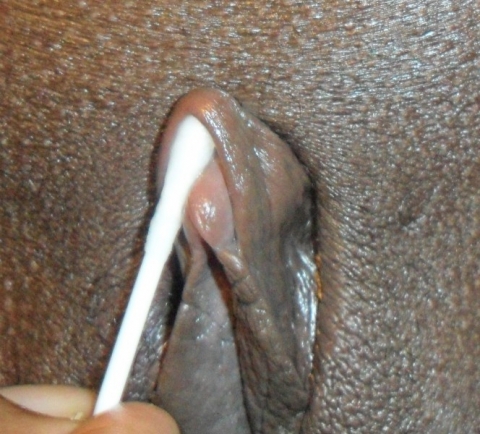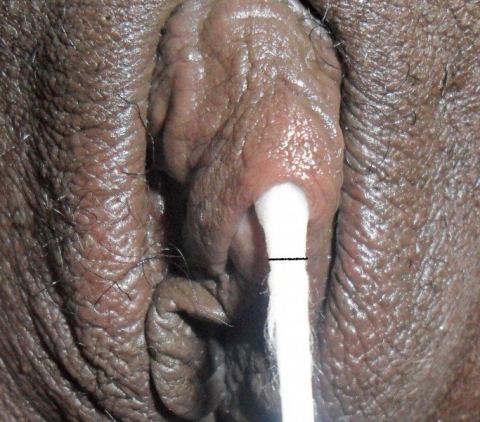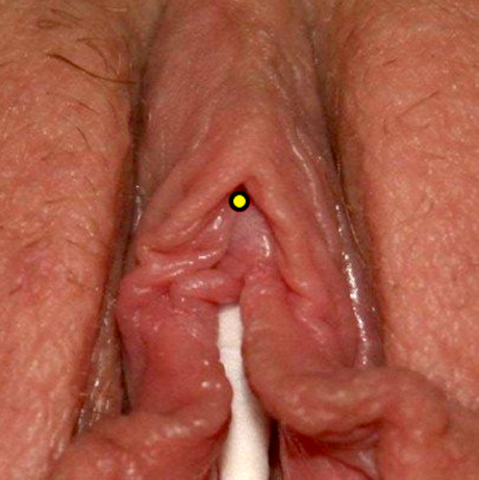

This information relates to the Vertical Clitoral Hood (VCH) piercing. If you can fit the end of an ordinary cotton swab underneath your hood then it has sufficient depth for a VCH piercing.
Using this test I can check (at a distance) to determine if you're a candidate for the piercing. This is required in order to book a VCH piercing appointment with me. And I'm happy to do a consultation for you, even if you plan to go to another piercer.
The video shows how to do the q-tip test and the photos and text detail crucial information. PLEASE WATCH IT, AND READ AND FOLLOW THE INSTRUCTIONS CAREFULLY!
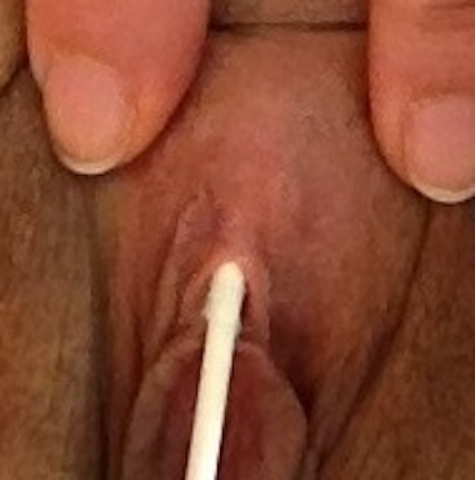
If the natural overhang of skin does not cover the swab tip, you might still be pierceable if you can manually manipulate the tissue over it as shown in the video. (It won't stay down on its own, which is fine.)
Other considerations include an absence of vessels on the midline, and sufficient space above your hood for jewelry to rest safely and comfortably.
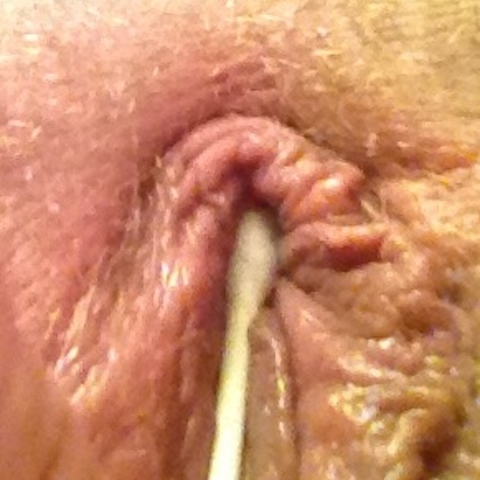
Note that I ALWAYS wear gloves for client contact! Images without gloves were sent to me for consultations, and are posted anonymously and with permission.
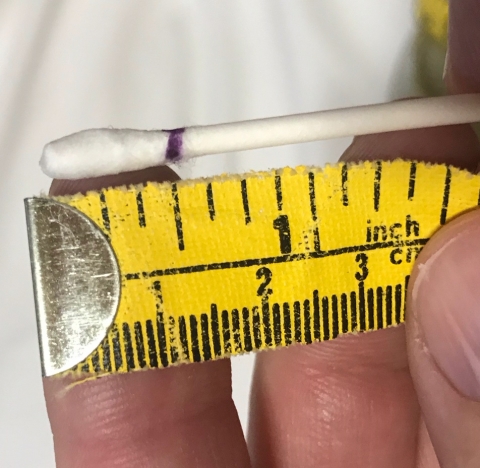
- IMPORTANT! De-fluff (remove some of the excess cotton), lubricate the swab tip with something thick--not liquidy, and mark a line where the post ends and the cottony tip starts.
- Include a photo of this swab against a ruler.
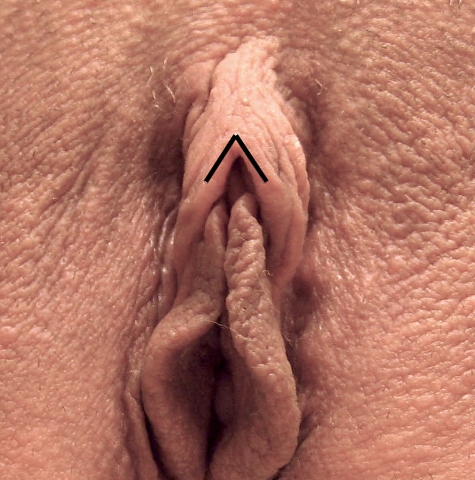
- Locate the "inverted-V" of your hood--you'll put the swab under there.
- Gently lift up the edge of your hood.
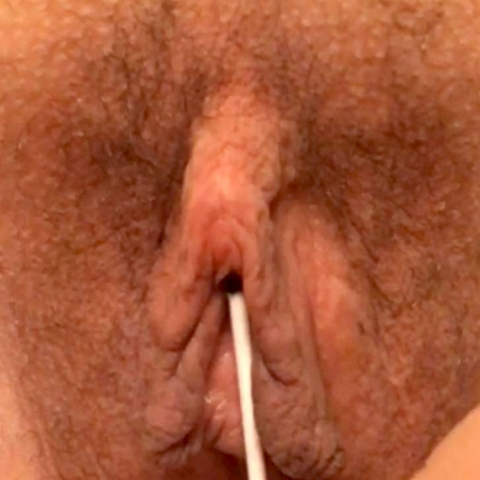
- Slide the swab as deep as you can under your hood, but don't push up too hard, and angle the swab so it is visible under your hood.
- Do not pull upward on the skin above your hood--that makes it look shallower than it really is.
I need to see at least two images:
PHOTO 1: Align the marked q-tip with a ruler so I can see the measurement.
PHOTO 2: The lubricated swab under your hood as far as it can naturally go.
PHOTO 3: (OPTIONAL) If your hood doesn't cover the swab to the line, use tissue manipulation to move your hood down to cover. See video!